

This is the third post in my AI for Life Design series - and if you’ve been following along, you’ll know that I’m on a mission to show complete beginners how AI can genuinely improve everyday life. In case you’re wondering, yes - I’ve been using AI to help me write this series. It feels only right to practise what I preach, and show you what’s possible…
In my last post I introduced you to the main AI tools and walked you through setting up ChatGPT. Today I want to go a step further and show you the kinds of things I’ve actually been using AI for in my own life. Not hypothetical examples - real ones, from my kitchen, my garden, my inbox, and yes, even my tarot cards.
Some of these will make you think “oh, that’s useful.” Others might make you think “wait, you can do THAT?!” Either way, I hope they spark some ideas for you.
1. Decoding T&Cs And Legal Documents
We’ve all been there - faced with a wall of tiny-print legal text that we know we should read but absolutely cannot face. I used to either skip it entirely (risky) or wade through it feeling bored and confused (not much better).
Now I paste the whole thing into ChatGPT and ask it a specific question. Recently I uploaded my car insurance policy T&Cs and asked: “What European coverage does this policy include, and are there any time limits?” Within seconds I had a clear, plain-English summary.
This works brilliantly for any form of contract, T&C’s, rental agreements, subscription terms, warranty documents - anything that you might usually skim-read or scroll right past in your speed to click an accept button!
2. Recipe Ideas Using Things From The Fridge
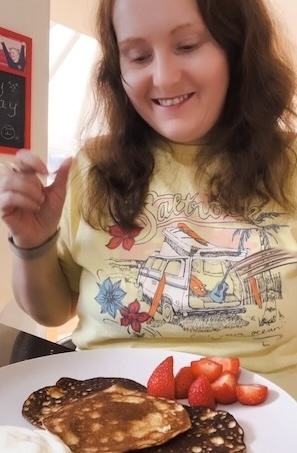
This one is kinda cool. On those days where you’re just not sure what to cook, try describing what foods you have in your fridge and asking AI to suggest something. Or better still, take some photos of the contents of your cupboards and fridge and upload them into AI. It still amazes me how good AI is at photo recognition now!
My favourite example: I had sourdough discard that needed using up and so I asked ChatGPT what I could make with it. It gave me several ideas I hadn’t considered, along with full recipes. I ended up making sourdough discard pancakes - it was a really easy recipe to follow and the results were absolutely delicious. This has now become a regular weekend treat in our house, perfect with a little maple syrup drizzled over…yum!
You can be as vague or as specific as you like. “I have chicken, some wilting spinach and half a tin of coconut milk” works just fine.
So get ready to experiment with this one and have fun!
3. A Month-by-Month Garden Planting Plan
I’m a total beginner gardener and I’m trying to be better at it. The problem I encounter is knowing what to do and when. I asked AI to create a seasonal month-by-month planting and maintenance plan for a UK garden, giving it details about the size of our land and what we’d like to grow.
I was presented with a structured plan covering sowing, planting out, pruning, feeding and harvesting, month by month throughout the year. I sent the PDF to my tablet and opened it in Goodnotes (which I use for all my notes and journalling), now I can update the checklists using my apple pencil to keep me on track with my planting! It’s saved me so much time googling individual plants and trying to piece together a coherent schedule.
4. Identifying Plants and Trees From Photos
Did you know you can upload a photo to ChatGPT and ask it what something is? This has become one of my most-used features.
We have a couple of shrubs in our garden that I’d always thought were beautiful, but never knew what they were. I took photos, uploaded them, and within moments had the species name, some background on the plant, and advice on when and how to prune it. I’ve also done this with wildflowers, trees and random plants that shoot up in the garden - it’s a great way to check whether I’m about to pull up a weed or a visiting flower!
5. Housekeeping assistance
This one felt slightly absurd when I first tried it - but now it’s a fun gamification tool for tidying the house!
I took a photo of our bedroom (which, if I’m honest, had become a bit of a dumping ground) and asked ChatGPT to look at it and suggest the most logical order in which to tackle clearing and cleaning it. It broke the task down into clear, manageable steps, suggesting where to start for maximum impact and how to work around the room efficiently.
There’s something about having a specific plan that makes the task feel so much less overwhelming. Give it a try on your most dreaded room.
6. Writing Firm but Polite Complaint Emails
I find it genuinely difficult to write emails to businesses when something has gone wrong. I either come across as too apologetic, or I overcorrect and sound unnecessarily aggressive. Neither gets great results.
Now I describe the situation to AI and ask it to help me write a response that is polite but firm and clearly states what resolution I’m looking for. The suggested emails are always well-structured, professional and appropriately assertive. I recently used this when communicating with a venue I’d used for an event where multiple things had gone wrong on the night…and the result? The manager has now kindly offered to let me hold another event there for free in order to make it right.
7. Birthday Gift Research
Anyone else spend an excessive amount of time trying to think of the perfect gift? I described a friend to ChatGPT - her age, her interests, her lifestyle, a rough budget and asked for gift ideas. It came back with a list of suggestions, many of which I hadn’t thought of, including some that were spot-on for her personality.
It’s particularly useful for people who are tricky to buy for, or when you want to move beyond the standard candle or wine default. Try it before you next reach for an Amazon gift card out of desperation.
8. Silly Poems and Creative Writing
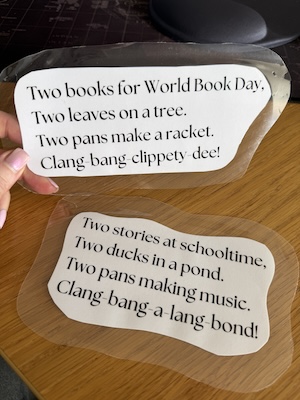
This one made me smile the most. When my son Finn needed a World Book Day costume and had decided he wanted to go as the Saucepan Man from The Magic Faraway Tree, I asked ChatGPT to write a short, silly poem in the style of the Saucepan Man’s funny songs. I was presented with plenty of options, went back and forth with a few alterations, then printed out and laminated the best 3 attaching them to his costume. It just added a little extra fun to his outfit and he loved it!
What came back was so cute…rhyming, in character, and absolutely perfect for a five-year-old to recite. Not being one for writing poems, this would have taken me hours to think up, so it was a great time saver.
AI is wonderful for this kind of creative brief. Birthday card messages, thank you notes, speeches, school project rhymes - anything where you need words but the blank page is staring back at you.
9. Understanding Tarot Card Spreads
Now here’s one that might raise an eyebrow or two! I enjoy pulling tarot cards as a reflective practice. It’s a way to prompt thinking about what’s going on in my life. But I’m still learning the cards and their combinations, and sometimes I find it hard to decipher what my tarot spreads mean.
I photographed one of my spreads and put it into AI so that it could see which cards appeared, in which positions, alongside what question I was exploring. I then asked for an interpretation. What came back was a thoughtful, nuanced reflection on themes and possible meanings that helped me think things through more deeply. I find it genuinely useful as a “thought prompt”.
If you have any kind of reflective practice - oracle cards, dream journaling, intention setting - AI can be a wonderful thinking companion.
10. Jewellery Valuations for Home Insurance
This one came out of a practical need. When I was reviewing my home insurance contents cover, I realised I had no idea of the approximate value of several pieces of jewellery I own. Getting them all professionally valued felt like a lot of effort and expense.
I described each piece to ChatGPT and uploaded photos - the metal, the stones, the age, the style, any markings - and asked for a rough indicative valuation range for insurance purposes. It was clear that these were estimates rather than professional appraisals, but as a starting point for understanding whether my cover was adequate, it was incredibly helpful.
Obviously for anything of significant value, a proper valuation is worth getting - but for building a general picture, this was a great first step.
11. Diagnosing Plant Problems
My lemon tree developed sticky leaves, and before AI I would have spent a frustrated twenty minutes going down a Google rabbit hole, opening fifteen tabs and still not being sure what was wrong.
Instead, I described the problem to ChatGPT and uploaded some pictures of the leaves. Within moments I had a diagnosis (scale insects, as it turned out), a clear explanation of why the stickiness occurs, and a step-by-step treatment plan. The plant is now well on its way to recovery.
I’ve since used this to identify other plant issues (usually annoying little plant bugs) and found the best ways to treat them. It’s like having a knowledgeable gardening friend on call at all times.
12. Decoding Loyalty Programme Benefits
I’m a member of several loyalty programmes and I’m slightly embarrassed to admit I rarely knew exactly what I was entitled to at my current tier, let alone what I’d gain by moving up. The information is usually spread across multiple pages of a website and written in a way that makes comparison difficult.
I asked ChatGPT to research a couple of programmes for me (ahem Holland Cooper and Fairfax & Favor!), summarise what my current tier includes, and explain clearly what the next tier would add and whether it seemed worth pursuing. It laid it all out in a simple table and even gave me a view on whether the upgrade threshold was achievable for someone with my usage patterns.
I’ve since done this for hotel programmes and airline loyalty schemes.
These are just a few of the use cases I’ve stumbled across in my own daily life over the past couple of years. The thing that strikes me every time is how much time and mental energy I save - not on big, dramatic tasks, but on the small friction points.
That’s what AI for life design looks like in practice. Not rocket science…just a very clever tool that helps you think more clearly, do things more easily, and free up a little more space for the things that matter.
Which of these ideas surprised you most? And have you tried anything with AI that I haven’t mentioned here? I’d love to hear in the comments below, let’s share tips!…
Enjoyed this post? Share it!
Previous & Next Posts
In my PREVIOUS post I shared a beginner’s guide to ChatGPT - meet the main AI tools and get set up today.
